Date: 25/06/2026
Mood: excited
Listening to: Domination - Pantera
Paul Landers Guitar Gear and Electronics
An overview of everything I know about Paul's electronic gear and guitar equipment. Please use the navigation to jump to your preferred subject. I cover: SansAmp's PSA-1 and GT2, the PL1's creation, other odd gear allusions, and DDR era obsolete equipment I could find.
Some contents are aimed at guitarists looking for direction for cover songs. At the same time, I tried to retain casual interest for fans looking for easy explanations too or a simple scroll past expensive electronic knickknacks. I hope this page strikes a balance between both audiences. I do several myth corrections on various equipment lists online. I have audited everyone's forum rumors. My list is far more sourced, uses primary material, and reliable under scrutiny. I would defend my research tooth and nail. I would sleep well at night if he loaded this page to judge me.
If you are confused by gear claims for Paul online from forums or fansites please go right to the FAQ primer. It means you need immediate clarity. Once you understand some basic confusion points, you can start reading the page normally.
If you are a first timer who has never read a Paul gear list before, I suggest reading this page normally from top to bottom as needed for what you are looking for from the page menu below. And consult the FAQ if anything was unclear.
Because this page is where I get really granular the more you scroll down. All business up top. Then about halfway through this article, around the PL1 section, you start double checking the scrollbar. By the time you see the word Vermona, you start questioning your choice to read downward. If Paul reads this page, I'm pretty sure the footswitch segment is where he'd personally go, "all right, she got me good that time. well played."
Quick guide to Paul Landers' guitar gear
Paul doesn't use long chains of equipment, no known rectifier is used live, and doesn't prefer/use amps in a majority of cases. He prefers a consistent reduced signal-chain minimalist approach across decades, specifies a preference for transistor circuits, and relies upon direct / emulation based devices to achieve this. He prefers Tech 21's GT2 the most of any device. He was known to use a PSA-1 on a rack mount prior. For an unknown amount of time in the 2010s, he used Fractal Axe FX emulation live. Paul suggests in interviews his sound is: direct, transistor, aggressive, quick/fast, thinner, controlled, and emphasizes his unique approach to the instrument.
Guitar model info

- Dirty answer: Use a Gibson Les Paul, bridge pickup emphasis, and EMG 81. Paul has a EMG 60 neck pickup attached, but not the focus to a tight rhythm player like him.
Go here if you are looking for the guitar model names per era.
Short answer: Tech 21 SansAmp
The most consistent piece of evidence across the years is Paul's use of Tech 21 SansAmp amp simulation devices. Especially the GT2 and PSA-1.
- Documented in: 1994, 1996, 1998, 1999, 2004, 2006, 2008, 2009, 2011, 2015, 2018, 2019, 2022
1994 → visually confirmed from Achtung wir kommen, a documentary with live footage
1996 → visually confirmed via August 1996 Bizarre Festival video
1998 → supported by the June issue of Guitar World magazine
1999 → the official Rammstein website Q&A lists "SansAmp"
1999 → Live aus Berlin's bonus DVD quiz states "Tech 21 SansAmp PSA-1 preamp with one preset"
2004 → Reise, Reise making of shows a PSA-1 in the studio space near Olli
2006 → Völkerball's booklet says Tech 21
2008 → Liebe ist für alle da making of footage has visual confirmation of a GT2 plugged into Paul's guitar within the studio
2009 → Liebe ist für alle da's liner notes say Tech 21
2011 → Made in Germany's liner notes formally says "Paul Landers plays Gibson, Tech 21"
2015 → In Amerika's concert liner notes lists Tech 21
2018 → Tech 21 formally and loudly declares Paul Landers has endorsed and collaborated with them on the PL1 Fly Rig
2019 / 2022 → Both Untitled and Zeit list Tech 21 and Andrew Barta in the liner notes
2024 → Paul inside his home studio photo, still rocking a PSA-1 rack mount 30 years later
- ➟ Dirty answer for GT2:
- ✅ California main
- ✅ Center - for emphasized upper mids
- ✅ Hi Gain main, try Hot Wired if you feel inclined
- ✅ High/Drive elevated
- ○ Test Level per song
- ○ GT2 has sensitive EQ - a bit goes a long way on all knobs
- ○ Start High/Drive at noon and work forward slow
- ○ Adjust Lows and clean out your bass mud
Modern rack / backup gear

2016-2017 based source photo that people may find online, points toward a "high end emulation device" as the main live system which is identified with the Fractal Axe FX family labeled here as "AXE". With the GT2 kept as a practical backup ("not-main"). This may have changed from past/future tours. A majority of his live setup is not publicized.
Midrange / Hand technique
If I personally told you the "secret" to the Paul sound, it's this: the midrange matters way more than you think. Underneath you are hearing dark, thick, low bassist in disguise body that sounds very 'wide' or 'full'. On top you hear the overtones of metallic edge, pick scrape, and his high gain 'teeth'. A good high gain with emphasis on mids keeps his attack readable, so every down stroke feels like a firm "hit". The compression makes it even and dense sounding but the pick attack causes his riffs to strike. If you are covering his parts, try focusing more on midrange settings and see if that gets any closer or better. I suggest focusing more on controlling tone and shaping frequencies instead of seeking another magical pedal or device being the answer. Do not add on more chaining. Focus on shaping what you have. That is the genuine Paul philosophy about it.
I would say the other half of the battle with him is grasping his unique pick attack and hand tension. He is self-taught and developed peculiar habits in playing. In photos and live footage, Paul's palm muting appears less like a flat palm edge mute and more like a knuckle mute.

This type of method can affect it to be firmer or more localized than a palm edge mute which is more blanketed. It all depends on his pressure used from this 'knuckle' but if he is doing what I think he's doing - it can affect his PMs to be drier or shorter sustain, or even more mechanical chopped. Paul's pick hand often uses a smallest finger anchor. Where the unused fingers hover near/against the strings instead of a neutral or curled position. That suggests a mix of anchoring and pick hand string muting / damping being in regular usage. Sometimes I swear to god, I can see his unused middle/ring finger sweeping back over or touching strings he just played or is trying to mute/damp them. There's so much more at play here than first meets the eye with him.

Paul's bridge pickup focused habit and peculiar PM suggests that his tone is built around fixed high gain attack points. The EMG 81 reinforces this from a tight, high output bridge pickup that favors cut and noise control with definition. His pick hand technique then becomes unusually important as a tool to that. Rather than letting pickup selection do these jobs or hand it off to a piece of equipment, he seems to do it himself and made this work with his peculiar playing habits.
I suggest taking a look at this technique used strongly in Giftig from this 4K video. You can even see that when he wants to resound his notes, he will pull his hand far and back off. There's some kind of method to keeping his hand anchored. At 0:50, he has a tight hand with smallest finger anchoring. Then a change to an even tighter hand with middle/ring at 0:53 that almost appears to be touching the strings and gripped. He holds that until 1:02 when the notes shift and he backs off such a tight hand back to the small finger anchoring. Then goes back to the gripped hand by 1:05. You see now? It's by intent to certain chords. He outright used his knuckle to mute and halt at 1:08 instead of using his volume. He didn't actually bother to volume turn until 1:10 so he could dance around without risking hitting anything. It's not random. Another thing on display in the Giftig example: he is changing his pick location. Sometimes he's lower right on the bridge pickup, sometimes just further up from it. He repeats this whole method in the next chorus at 2:05 showing every single position - it's intentional and means something. It does something I know a guitarist needs to understand. So I'm telling you this here. (There is also a lot of business like this shown strongly in Ich will as well.)
Something about his pick hand being very close to his strings is an intentional method he keeps a tight lock on doing. He does this damping and anchoring thing often in many videos. This may contribute to the dry chopped, mechanical attack of his rhythm sound. Although the exact effect depends on pressure used and bridge distance in any particular song. I suggest studying YouTube videos of him playing the song you're trying to replicate. There's more than meets the eye with him than just "follow the sheet music". I suspect half the uniqueness of his playing one would struggle to replicate is his personal hand tension and techniques. Then when you put him in a fast Rammstein song removing ourselves from slow abstract concepts and into practice, you can hear that unique aggression of every strike. It's being strongly emphasized by the GT2's settings to bring out these qualities. However, it's not the GT2 alone but also the hand. Together, the combination results in his sound. That's what you're hearing, I swear by it. It's unmistakably his and gives Rammstein songs a unique rhythm character.
Equipment FAQ Primer
Before you can understand my research, you need my evidence methodology and removal of preconceived biases from other bad information clarified.
What counts as confirmed Paul gear on this site? What are your standards?
I only acknowledge information from primary and secondary sources. No others allowed. If I cannot find where the fandom made it up from, I won't use it.
- Tier 1: Paul saying it verbally in audio/text.
- Tier 1.5: The brand itself mentioning him in official sources.
- Tier 2: Official Rammstein booklets and liner notes.
- Tier 3: Visual confirmations from photographs and concert screenshots.
- Tier 4: Guitarist publications and magazines with a healthy dose of skepticism if it contradicts tier 1-3.
My research is not trying to prove that Paul never touched any piece of equipment or has never heard of a specific brand. I'm also not trying to say he doesn't have a room filled with stuff he's purchased and sits at home. All guitarists buy electronic clutter. I'm defining whether there is sufficient evidence to present that equipment publicly as "Paul Landers' gear he uses regularly for a career".
Why are so many online gear lists inaccurate or outdated?
Your question is the answer: they're outdated and not maintained. From all the evidence surviving online, they appear to have stopped being maintained or cared about by any fansite since late 2009 or early 2010. Nobody has checked, edited, corrected, or done anything about it. That's the harsh truth. Even though Paul has finalized his Gibson Signature LP over a decade ago, many fansites do not list the guitar. Despite there being a huge focus on Tech 21 in 2018, fansites don't mention the GT2. Why? They stopped being maintained and update their news feed and do nothing else. The Rammstein fandom is stagnant online and languishing from past misinformation uncorrected.
As for why they're inaccurate: this is caused by copies between people on forums who don't know anything about guitars, treating liner notes as applicable to anyone, and forum speculation being trusted blindly. I would say most of these errors are caused by people who do not play guitars editing guitar info.
Does a brand appearing in the album or tour credits mean he used it?
The answer is no. "Rammstein uses", "companies we thank", and "thanks for their support" can include Richard's equipment, Schneider's drums, Flake's keyboards, various microphones, studio hardware, production vendors, touring suppliers, and so on. Many of the fancy brands you see are studio hardware, and while important, don't really "make" Paul's sound.
After looking at the chunky Richard equipment list from LIFAD and Made in Germany's liner notes - huge swaths of these name dropped brands inside Völkerball and In Amerika belong to him. There's some pretty heavy overlaps.
Does a brand not appearing in the credits mean he did not use it then?
Hilariously, no. Völkerball notably does not mention Ibanez, Gibson, or Ernie Ball Music Man. But Paul visibly on the DVD concert is using these guitars. Another example would be that 2017 Paris' blu-ray doesn't have any liner notes with a company list inside the booklet at all! I guess Paul's Gibson Signature LP is literally invisible...
Endorsement/support arrangements are negotiated individually and can have specific rules. Agreements sometimes require liner note credit. But merely using somebody's product does not create that obligation automatically. Especially if you purchased it out of pocket like any average consumer could.
Why do old gear lists contain equipment he rarely or never discussed?
Fans were taking any random gear or liner note claims and applying it to any band member, or both guitarists at once. This is seen with the Rath Amp claim where fans applied it to them both cluelessly. They also seem to think "I own this" means "I use it constantly for every song on this album", when this couldn't be further from the truth. As I said: most of this is caused by non-guitarists writing about guitars.
Why does putting dates on each piece of equipment matter? Why did you source/list every Tech 21 year mention? Redundant much?
Because musicians generally do not radically equipment hop every album to reset their entire sound. But usually have gradual 2-3 soft changes across their careers that mark eras of tone preferences. This Tech 21 base is his principle that refuses to change. If you are genuinely seeking to understand him, this is what a real guitarist wants to grasp. They do not want to see a list of random crap Paul mentioned in passing.
They want to know the base tone principle and core the player gravitated to career long. Then ask if this changed, and when and how far was the deviation from the origin. Guitarists know why I did it and thank me. It's what they wanted from an equipment page in the first place. Paul doesn't have any deviation other than pre/post DDR. And it's why I included the DDR context side by side to show his genuine shift and his roots for non-DDR guitarists who have never heard of Vermona.
Did he formally use the Engl Powerball live or in his rig?
This is unknown information but semi-plausible. The Völkerball booklet's company credits list has Engl present and doesn't appear to be associated to Richard in the past or future. If he did use it, it appears to be for select songs for specific settings insular to Reise, Reise in some way. Tech 21 is still listed as always right beside it and was not replaced. Engl doesn't get mentioned in future releases.

Did Paul really use a Fractal Axe FX unit live?
Yes. The rack drawer photo that was published in 2018 shows labels called "Axe Main" attached to the wires/box - this is the Fractal unit being alluded to. The only confirmed time period is the 2016-2017 tour cycle. Other tours are unknown. The exact model is unknown, but the strongest candidate is the Axe Fx II unit in my opinion. One alleged forum guy with "insider knowledge from crews" believes the same thing and his claim about Paul hating the menus is confirmed by the man himself. This forum post is mildly credible.

Could the Engl Powerball have replaced the prior Mesa Strategy 500's role?
Technically speaking if you split hairs about guitar signal-chains, yes.
Logically? Paul logic in my heart??? No. I suspect it was used as an added sound, texture, or keyed in tone for certain select songs or parts if it really was used live.
Consider the following on my page: 2002 mysterious footswitch keying in an unknown added source for select parts.
The other fansite made claims about "Mesa/Boogie Dual Rectifiers". Can you explain?
This is equipment accredited officially to Richard Kruspe.

So the claim of "Dual Rectifiers" or "Dual Rectifiers Pre 500" is misattributed. But Richard's claim in a 2007 Metal Hammer article is the origin of this conflated confusion. All he said was: "Paul und ich spielen sehr ähnlich, zumal auch der Sound bei uns fast deckungsgleich ist, weil wir beide im Studio mit Mesa Boogie-Rectifier arbeiten."

Based solely on current credible documentation:
- Paul doesn't appear to use Mesa/Boogie Rectifiers live or in his rack.
- He has used it in the studio according solely to Richard and this was stated regarding pre-2007 era. It is unclear if it only applies to Reise, Reise / Rosenrot's work.
- Has never been directly associated with "Dual Rectifiers" or the "Pre 500" serial numbers. Those are not the words Richard used.
- No interviews I currently have possession or digital copies of has had Paul himself mention this. It only comes from a 2007 interview with Richard.
Hellner said about Herzeleid in 2020, that it was 2/3 Mesa Rectifier and 1/3 SansAmp. Richard said in that quote above (most likely referring to the 2003/05 sessions) that he couldn't tell the full difference between his and Paul's tracks being layered in the mixes because they were using Mesa Rectifiers in the studio.
Can you explain the "Mesa Stereo Simul-Class 2:90" claim?
No, I cannot. I have found no evidence or source for this in any capacity. If someone knows the origin, get in touch with me immediately please. Logically speaking, the confirmed usage Mesa Strategy 500 already does everything this piece of equipment does. They're both poweramps and that makes both of them inside one rig weird and redundant. The earliest trace I found of this was 2002 with no source.
What is the "Rath Amp" claim?
It originates from the album Sehnsucht's liner notes. It does not say Paul used this specifically, nor what this brand or company provided from their products to anyone. Once again, Richard exists and brand listings sometimes are related to studio equipment.
What about the Dean Markley strings claim?
I have not found the source. If anyone knows it, please get in touch with me. This brand appears in the Völkerball liner notes and sometimes in the future is associated to Richard's gear. It's currently unclear where/when this could have possibly applied to Paul or not.
Why is Richard's equipment so long but Paul's isn't? What is missing?
"I love that I can plug it right into the computer, the PA system, or the sound system. I don't need an amp. Maybe you'd call it being lazy? Nah, I like that direct sound. Why even use a guitar if you're making it so unnecessarily complicated? Going through the amp, then through a mic, the speaker - ah that's too many components. When I turn a knob on an amp, it just gets even worse."
Nothing is "missing". There is no forced or obligated method to use the guitar or create tones a certain way. Paul's method and philosophy is as valid as any other player ever and doesn't need to be compared to everyone else. Hope this helps.
Why does Richard share every piece of equipment or do endorsements but Paul refuses to explain?
Because they're not the same person with the same personality and same outlook about the instrument. Hope this helps.
If I'm completely honest, it's not Paul's belief in music philosophy to encourage people to imitate everything. Part of this is because, you should learn for yourself instead of copying him because he's the Rammstein guy. He speaks strongly about individuality, uniqueness, reason for music to exist, and he has this stubborn "if everyone does that, I do the opposite" streak on him. On this very page, go to the Fractal Axe FX segment and watch him express this exact opinion.
He has revealed the minimums of his career if you want to imitate him by just saying Tech 21. All you need to grasp is PSA-1 and GT2. The GT2 reveal narrowed him down to three choices. If you use logic, you'll know British and California are the only real options. By understanding he's a metal guitarist, logically selecting Hi Gain on the pedal would be correct to gravitate to by gut instinct. Why don't you try experimenting from there and finding yourself instead? I'm sure it's what he'd say.
I think he wants you to figure it out for yourself and experiment or find something that was like him, but imperfect and your own creation. And if you really feel so strongly about him specifically - he gave you the PL1 Fly Rig.
Where is the rest of it? Where is the signal-chain?
There is no more excessive chaining or huge live rig. Paul isn't interested.
"I love that I can plug it right into the computer, the PA system, or the sound system. I don't need an amp. Maybe you'd call it being lazy? Nah, I like that direct sound. Why even use a guitar if you're making it so unnecessarily complicated? Going through the amp, then through a mic, the speaker - ah that's too many components. When I turn a knob on an amp, it just gets even worse."
But... a single Tech 21 box cannot be responsible for all tonal shaping and EQ I hear in this song or live recording?
Now you're asking the real questions! Congratulations. Paul is very interested in EQ shaping equipment that either is before/after the Tech 21 device. In the 90s, he utilized the SPL Optimizer which is a parametric equalizer to shape and tonally correct the PSA-1 with the touted "surgical accuracy" audio nerds love. What he uses in modern times, is anyone's guess. Surely it's something, but that electronic box of something isn't known by name.
Additionally, during live shows, he likely has other shaping, EQ, and equipment at play that is helping the Tech 21 or Fractal product along for a huge live production show's sound quality outside of a controlled studio. This exact equipment is unknown and are the real questions we should be after.
Paul put all of his deep cut, well informed opinions on what good EQ is and should be into the PL1 Fly Rig collaboration with Tech 21 for every knob and press-able button. He specifically wanted to improve on EQ and controls available that suits his tastes as his main addition and was the immediate 'flaw' he felt the GT2 held. Inside my PL1 page segment, I discuss some of this briefly. So... if it matters to you that much - go find the effects pedal for sale.
What bands or influences has Paul mentioned? I read your PSA-1 / GT2 settings and...
Many times in the 90s the band were asked and Paul always supplied answers: Metallica, Pantera, and Ministry. He is the only band member who repeatedly said Pantera. He gave strong praise to Gary Numan whom he called "a legend", and Nine Inch Nails was something he wished he was "a part of". I've not heard him really commentate much on other bands in the way he gave such explicit words to those acts. In May 2012, Metal Hammer made the editorial addition of saying "Metallica, Pantera, Slipknot" when mentioning his favorite guitar sounds.
The comparison you're thinking of is simply Mesa/Boogie amp family emulated by the PSA-1 and GT2 having a recognizable character. And much like Dime, Paul is a very EQ focused guitarist (he was using a parametric equalizer live...), they both prefer transistor circuitry, and like making unique sounds come from an instrument.
What's his modern pickups or strings information?
This can be understood from the official Gibson Signature Les Paul product page. Bridge pickup EMG 81. Neck pickup EMG 60. His strings are Gibson and labeled .010-.046.
What's the origin of his clean tones?
Roland Jazz Chorus 120.
You have the liner notes... can you share the photos?
Sure.


You seem to know what you're talking about. Can I ask you more questions?
I've basically put what I know here. Anything I say would be me repeating it a second time, but longer. If you have extremely specific niche questions, I might be able to help. Or have some other fansite claim you want me to fact check or help with.
But vague questions? Or me telling you exact knob positions? No. Please take the Paul philosophy and learn for yourself to be your own player and unique self. Experiment! Have fun. I've already handed you the keys. It's up to you to use them.
You entered the gear abyss and came out the other side... you okay?
The words tonal shaping, poweramp, and signal-chain are permanent parts of my vocabulary now. My targeted advertisements online are filled with guitar electronics. My YouTube recommendations are chaos. I haven't closed 10 tabs to European musician forums in six months. I've legitimately studied the PSA-1 and SPL Optimizer's manuals. I plugged my PL1 into my Axis and turned the knobs for several hours. I'm FINE.
SansAmp, GT2, and amp simulation

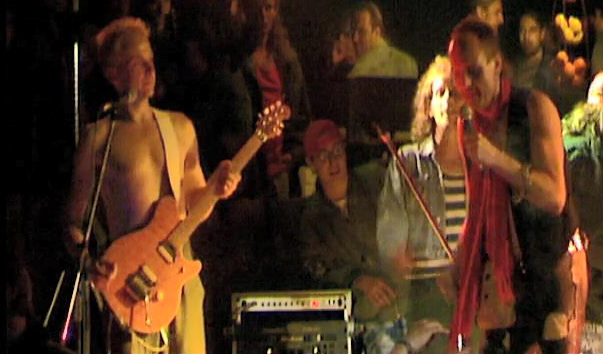
The most widely famous piece of Paul equipment ever. Unfortunately, the materials do not explain how Paul discovered this brand. However, based on my research, it had to be just before or around 1994 in some way. He strongly appears to have the PSA-1 on this rack while on stage in 1994 footage. This matches future descriptions from Paul and Andrew Barta about a rack mount being in use.In the 2018 Casopis Muzikus interview, Stefan from Sound Service recalls meeting Paul through Richard in "autumn 1996". And alleges that he "recently" discovered the PSA-1. This is impossible to be literal 1996. By then, as shown in my article with visual video evidence - Paul used the PSA-1 in early 1994 and it's already on his August 1996 live rack. Yes, Stefan met Paul in this era and I believe that. I do not believe the comment about "recently" was literal as in a few months before that meeting. It is far more likely he obtained the PSA-1 between 1992 and 1994 somewhere, if I'm honest based on every scrap of evidence I've ever seen.

Early SansAmp PSA-1 sources
From here, two late 1990s sources confirm SansAmp usage. Followed by Andrew directly identifying Paul's early rack unit as the programmable PSA-1.
Question: Which equipment do you use?
Paul: Logic, AKAI, ESP, Musicman, Mesa Boogie, Protools, MAC-Computer, SANSAMP, [Ensoniq]
Both guitarists summon their ominous, crunchy tones live and in the studio by plugging Mesa Boogie and SansAmp preamps direct into the mixing board.
Paul: The SansAmp PSA-1 preamp opened up a whole new world for me because it let me play direct, the way many musicians now do with digital emulators. The PSA-1 sounds nasty, a little mean, but above all very distinctive and that's the most important thing to me. I like that general quirkiness in Tech 21 gear.
When Tech 21 founder and inventor Andrew Barta attended a concert by pyrotechnic industrial metal band Rammstein 20 years ago in New York, he was blown away. [...] But he also was thrilled to discover that guitarist Paul Landers was using Barta’s Tech 21 gear — the programmable PSA SansAmp rack mount. In later years, Landers also used the SansAmp GT2, a proven workhorse pedal that lay the foundation for the company’s popular line of Fly Rigs.

Later GT2 confirmations
In 2008, Paul once again brings up the SansAmp. He never clarifies if it's GT2 or not by then. All Tech 21 materials suggest he using the GT2 though "later" which would have to be somewhere in the 2000s, such as during this era. From the out of focus LIFAD making footage, you can see a visible GT2 pedal on the table that he's plugged into and looking at.
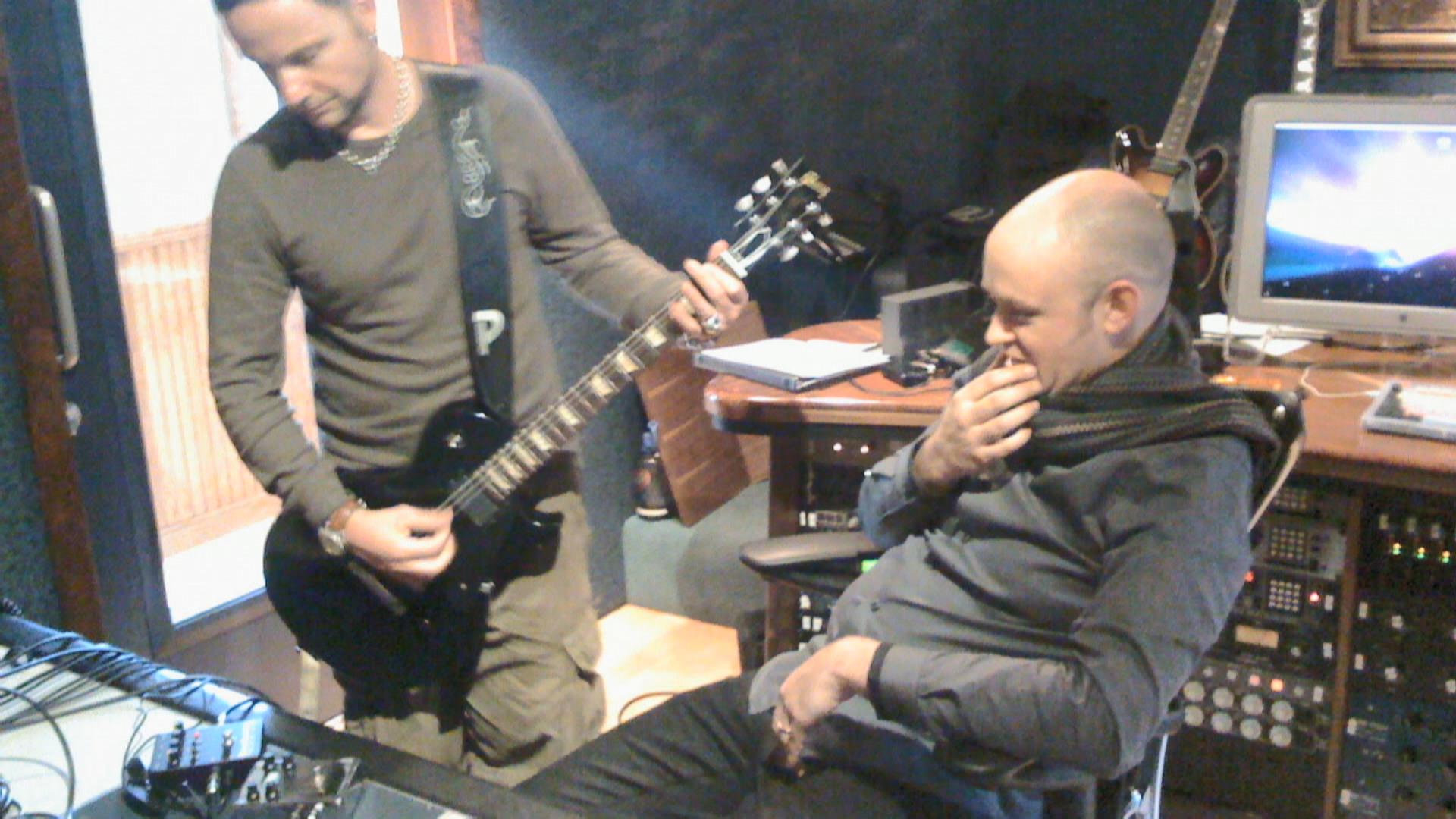
For the Rammstein guitar sound, its always been a Rectifier with Richard playing ESP guitars, while I used to play Music Man with a SansAmp. And now I play a Gibson Les Paul because my name is Paul too, and I liked that.
The GT2 has been repeatedly referenced in Tech 21 materials as his main Rammstein sound source. Tech 21 also emphasized that putting the GT2's capabilities into the PL1 was an important process. The strong implication here from Barta is replicating the California amp emulation function, among other traits.
Paul: For years, I had the PSA1 and then over the last few years I've been using the SansAmp GT2.
To create the PL1, Landers sent Barta all the settings he used on his SansAmp GT2 and the designer built a pedal that was lightweight and simple to use.
“Basically, the distortion is the most important part of this pedal,” Barta says. “That’s the core — a real heavy metal crunch. We got that.”
Paul: Eventually I landed on Tech 21's GT2, where there's one specific sound I particularly like and have stuck with for years.
Paul: When the guys [at Tech 21] asked me if I wanted to have my own pedal it was exciting for me to say yes because I am playing SansAmp all the time anyway.
1996 rack photo setup
First of all, every version is unattributed or sourced. The earliest version I found was July 2002 (link is now broken) but echoes in 2004 and gets worse. This is unsourced fandom playing telephone. Why does nobody know this is 1996? Second, part of it is guitar buzzword salad. Anyone looking would be confused what is going on anymore due to Mesa redundancy between Strategy and 2:90 and how Behringer was conflated with SPL. And the SPL Optimizer would feel so strange at first glance for a concert rack, you'd think the list is un-credible.
After staring into the forum abyss, I realized with joy the electronic knickknack list originates from a 1996 Bizarre Festival screenshot during Seemann. The format of the list is top to bottom for the screenshot. Gott'em. Part of this list originates from the Live aus Berlin Fancontest feature from the DVD, but that only gives us PSA-1 and Strategy 500. The true forum repeat list comes from 1996. This does suggest that the 1996 list continued on until at least 1999.


Immediate corrections on the photo: anything not said here is unconfirmed. The photo only supports this list and no other version of the list. I stared at all product photos to the stack. This is what is here. No exceptions.
| Object | Purpose |
|---|---|
| Furman Pl-Plus E Power Conditioner and Light Module | Supplies power to the rack. |
| Shure UHF MARCAD Diversity | The wireless receiver. |
| SPL Optimizer | Detailed EQ shaping and precise tonal corrections. It's a parametric equalizer so it provides deliberate frequency control the early PSA-1 lacks. Usually found in studios, but Paul is not normal about signal-chains. He wants his aggressive midrange, specific frequency ranges, shaped sound body, to cut that bass mud, and you're not going to stop him. This box is SO Paul-coded it had me laughing and still does. I forgive him for the awful blonde dye for this. I really do. |
| Behringer Intelligate XR2000 | Noise control. A gate reduces hiss/noise when a guitarist is not playing. This is especially useful in tight rhythms and palm mute heavy songs. |
| SansAmp PSA-1 | Preamp and principal tone creation. Reproducible distortion and amp character he wants. |
| Korg ToneWorks DTR-2 | Preset tuner. |
| Mesa/Boogie Strategy 500 Stereo | A power amplifier stage. Powerful, high end. |
| Object | Intent |
|---|---|
| SansAmp PSA-1 | Construct the distortion and simulated amp identity's principal tone. |
| SPL Optimizer | Decide precisely where the frequencies, weight, cut, and attack live. |
| Mesa/Boogie Strategy 500 Stereo | Make that constructed signal physically enormous without immediately softening or smearing it. May be selected partly for enormous headroom, speed, and cabinet driving authority. |
The GT2 "Not-Main" / Fractal Axe FX rack photo explained
This isn't the English word "Not". It's German for backup/emergency. All of these labels have to be interpreted with this context. This photograph was used in Tech 21 promotional articles because it appears to be providing context for the emulation story.
For a while, I did use a digital emulator live, but when it broke and I switched the GT2 back on, it was like all the lights came on like salvation.

The elephant in the room is, I haven't explained what "Axe Main" is. During the Tech 21 promotions of this "high end emulation device" failure story, they were being polite to not name the product. They also showed this photo indicating the GT2 was the backup system for any further failures.
Just prior to serious discussions on the development, Rammstein were in rehearsals for their 2017 tour. Paul initially opted for, dare we say, a very high-end digital emulator/effects processor. When it unexpectedly went down, he grabbed his trusty SansAmp GT2. It was unanimously agreed by the crew, sound engineers, fellow band members, and Paul himself, the GT2 had more “air” and liveliness. This marked the initial design foundation for Paul’s Signature Fly Rig.
I know what this is! Paul's personal use of a Fractal Axe FX unit is confirmed via the official Fractal website's artist list, and was put onto the Fractal website in September 2017 at the earliest. It remains to this date.

Because he doesn't want to comment, (truly, I don't know what I expected except "no" or maybe, "it works".) I noted his commentary on using one for live and programming menus himself.
I've poked around on the Axe FX and edited the parameters, but fiddling around in menus like that just isn't enjoyable for me.
These things strongly identifies a Fractal Axe FX family unit as his main digital processor during the 2016-2017 festivals tour. The exact Fractal model and the full duration of its usage are unknown. These cable labels, the Palmer Ybox splitter, and instructions strongly indicate this is a backup rerouting signal rack drawer photo to the Axe FX and not the "main rack setup".
As for why he would opt for a high end digital emulation device, he likes directly repeatable and consistent output from a device. Devices like Fractal Axe and Kemper Profiler do that well. The gained popularity of such devices is notable in guitar press.
He clarifies his own reasons for supposedly shifting away from the device. Simply put: once everyone is doing it - Paul wants the opposite. He did like the sound produced by a modeler. What he did not like was conformity and fiddling with menus.
His sentiments about the Axe FX device were:
- navigating in menu layers instead of immediate hands on controls wasn't fun
- waiting for equipment to boot up when it should simply turn on like a lamp
- not feeling distinct in a crowd by using it
I'm not the only one playing with a direct signal anymore. The Axe FX and Kemper Profiler now have their fans. I'm happy there's so many of us now. I was on that simulation side for a while too. But everyone who plays without an amp does that now, and so I really gotta go somewhere else again. That's why I'm glad to be back on the side of the analog Tech 21 SansAmp.
A random forum guy in 2018, also made the Axe FX claim from alleged "insider touring knowledge" from another guy. He claims the unit was a Axe FX II and he didn't like reprogramming the menus. Which is spot on with the Paul's own claims about menus and presets being loathsome. There's a slight credibility here, but please keep in mind it's literally "guitar dude on the forum".
Tech 21's PL1 Signature Fly Rig
From the long Tech 21 related affinity, grew a potential collaborative project. This product strongly leaned into his strengths and understanding of working with Tech 21 devices to crystallize it. That being his preferred SansAmp distortion, his clean sound needs, and numerous preferences and settings for fast, direct control with the guitar signal-chain chaff cut out.
First suggested by Stefan Kühn of Sound Service to Paul in early 2016 2018 September Metal Hammer or in 2015 according to Stefan 2018 Casopis MuzikusI don't mean to correct Paul's early 2016 narrative, but Stefan might be correct about mid-late 2015. Paul was spotted hanging out in NYC in Nov-Dec 2015... I mean it could have been a private vacation but the timing is uncanny. When he says early 2016 he could be thinking of "starting serious development phases" and Stefan is thinking of "when we started discussions and papers about it". Both make sense to say but are slightly differing ideas., he helped connect him to the guys at Tech 21 to propose ideas for a signature pedal. Paul credits Stefan strongly with helping this project come along during the making and prototyping stage regarding communicating his vision of the pedal to the correct terminology to avoid miscommunicating. 2018 guitar magazin The sound basis of the pedal's distortion was allegedly shifted to the GT2's base partway through and is emphasized in marketing. 2019 Guitar Worldtech21nyc.com Paul, however, maintained at the start (according to Stefan), that he did not want to simply recreate the GT2, but instead improve it. 2018 Casopis Muzikus
The PL1 deeply expanded upon to include the many added functions he wanted regarding EQ, mids, bass, and other compression and shaping tools that the GT2 doesn't have. Including the addition of his preferred clean from the Roland Jazz Chorus. 2019 Music Radar According to interviews, Andrew Barta developed a substantially new circuit architecture around that target without reusing the GT2 outright. In that regard, the PL1 is standalone and seems to go against the marketing team's GT2 push in other materials whenever you get direct statements from Andrew or Paul.
The rough estimate of prototypes was about 9 to 11, with the most common number tossed out being 7, 2018 guitar magazin2018 September Metal Hammer and it was tested live several times in 2017. tech21nyc.com2018 September Metal Hammer

"So is it a repackaged GT2 then?? It was just for travel?"
Absolutely not. No. The marketing to this device is very confused and underselling what it does. (A story for another post coming soon™.) There's numerous options here you can't have on any base GT2. Including options that make no sense for merely a traveling leisure pedal. They marketed as the fun hotel pedal traveling to the beach to surf and have portable studio sound. But inside it's fully loaded, armed to the teeth ready to fight the guitar's live/band mix at a moment's notice and win. Any FOH would adore this pedal for having so many live ready features. Ones that are critical to helping replicate Rammstein related sounds that would require further equipment purchases or be otherwise impossible/unknown. As Paul's equipment and racks are guarded secrets hidden in a vault with a 24/7 security for many years.

I would hesitantly describe the PL1, in my opinion, as a pedal that focuses on replicating Paul's entire working environment and SansAmp simulation he loves to use but has all of the portability that makes it versatile like a Fly Rig as a bonus feature and why he would choose that presentation for the pedal visually. In that you can end the show or leave band rehearsal or workshopping in a group, and then reuse it in your hotel or home studio by yourself not needing separate equipment. When you frame the PL1 that way, it finally causes Paul's promotional quote on the flyers to make sense instead of disconnected marketing.
With the PL1, I have everything I need in my pocket. Home, hotel, rehearsal, studio, concert - I just plug my guitar in and here we go. Although it is so tiny, I can dial in all the sounds I need for my band. You won't believe the flexibility of this small thing. I love the fact that I have an analog path that is not a digital animation. It is real! And what I love most is I can plug it straight into the mixer or computer! No amp needed for the best distortion sound I know of."
Key differences between the GT2 and PL1
Some key differences are choices you can't find elsewhere, but are functions built around his practical live, workshopping, and studio needs when fully mixed into a band. Paul's pedal is not focused on "me, me I am the loudest, boost me up" alone. It's very deeply focused on making itself work in a band, mix, and live setting. You will find numerous tools and EQ here meant for assisting playing in a group because that is his philosophy and preference.
- Feuer builds from the GT2 distortion foundation but adds Paul's specific control over EQ and feel.
- Wasser builds from the Jazz Chorus' clean and matters in some songs (eg - Mann gegen mann, Mutter, Haifisch)
- Analog delay emulation, with the basis of the PL1 being from the MXR Carbon Copy. With tap tempo (very useful in venues) and critical in Rammstein's strict sequencer and click structures.
- Active EQ (often called sensitive in reviews) / mid control / mid shift gives more shaping options than basic GT2 controls. He wanted control over what lets him stay defined beside others without simply becoming louder.
- Low-cut / High-pass filter supports his practical view that uncontrolled bass mud gets cut by a good mixer to strengthen midrange. If you've never cut this out of your Rammstein rhythm guitar covers, now is the best time to start.
- Onboard delay/vibrato/ambiance to cover his parts with immediate movement and space in a mix between songs without menus/settings on a separate setup. It's right in front of you, use it.
- Both negative and positive boosts for balancing parts or being in the whole band mix properly. He knows when he needs to step down in the mix for other instruments.
- Direct XLR / PA / computer usage makes it easier/quicker and replicates his signal-chain reduction philosophy that wants to be repeatable and consistent.

Paul: I built this pedal so I could have it covering all the songs I have to play with Rammstein. For example, there are some with guitars in the verses at a lower level - so I built a negative boost to get my guitars sounding quieter. Then there's the punch option, which adds more mids if I want to play lead.
Paul: That's no longer the case with the PL1, which works perfectly well in a full band mix without problems. Usable tones tend to have more mids, which also moves the sound a little closer to GT2-ish again.
He legitimately wanted Rammstein songs to be playable. That's a big reason why the live mix tests and making sure it can work with the band, without overpowering them, mattered to his prototypes. This pedal needed to not only replicate his sound and vision with these upgrades for working and travel, but also sound like him within Rammstein functionally.
However, Paul is a huge "no genre" and "it has to be unique" guy. He actually catered his pedal to do functions for many genres and things he doesn't personally prefer or play. He seemed rather proud of this aspect, but reviewers were too focused on the metal guitarist element to bother. Paul really isn't a 'selfish' guitarist - he thinks about uniqueness, range, and full band mixes. The PL1 reflects it.
Paul: You can pretty much dial in any sound you want. You can play blues, rock — it’s not just for metalheads. It’s a versatile piece.
Paul: By the way, thanks to the active EQ the PL1 can be used for all styles of music. Including surf tones, blues rock, or whatever else.
Paul: Yes, there's such a wide range of sounds within this pedal, mainly because I like variety. You can go really hard and heavy or dial in a tone more like a surf guitar - that's the clever thing: this product isn't just focused on our style of music. I like the idea of someone being able to dial in anything they want... you can't really do that with regular analogue pedals, for example.
Was the PL1 ever used live?
This isn't fully publicly known information. It was live tested and used within 2017 during several prototype stages, but there is no known evidence of being used in any later Rammstein Stadium tour show rig and is not clearly documented. Paul explicitly said it was not created in mind with replacing an entire live rack, but it does have many live mix features that are viable for a full band mix and a sound engineer would appreciate being there. If any evidence of its usage shows up someday, I'd be the first to make a note.
GT2 or PL1 for covers?
The answer to this question is: "how far are you willing to go for accurate replication?" I suppose that would be how serious or regularly you're trying to replicate Rammstein's sound or music. Someone in a cover band or trying to genuinely study their music closely, would be wise to bite the bullet and get a PL1. Someone casually trying a few songs for fun, and already has a GT2 in a drawer or has purposes for other bands that use SansAmp too, can stick by it.
While aiming for the GT2 seems like an obvious choice, the PL1 actually has numerous accounted for factors of Rammstein's music accommodated within and more feature rich choices with EQ, optimized for his indispensable R+ trait of upper-mid aggression, Compression and Bite switches, more control than ever, etc. Look at how many knobs are on this pedal, and you'll know he likes tweaking things audible only to cats like any amp person - just another guitar religion than signal-chaining things.
The PL1 is arguably the most complete modern shortcut to replicating Paul's sound or doing cover songs with consistency, numerous available tools customized, tools for making him sit inside the full band mix properly, and many niche aspects of the songs considered. He genuinely did want the Rammstein discography to be usable from it.
However, if you already have a GT2 available (it's quite popular after all), you should keep in mind certain quirks, specialized settings in some songs, or clean tones for specific songs you're after may not be fully replicated. Have realistic expectations with it. Try fussing with British and California the most. Extra emphasis on California. Mic should be Center. Then play with Mod's Hot Wired and Hi Gain a lot. Very relevant noise coming from Hi Gain. I don't think his High knob is hardly ever below the pedal's arrow markers lol. Whenever that's is higher, it's closer to him. Raising it after the gain structure can bring out the pick attack/scrape and upper mid's bite. You'll really get that "serrated edge knife" Paul feeling. Pay attention to your Lows after you do that. And Drive will definitely impact if you turn it gently for saturation and more compression. Also, like I said at the start of this post: bridge pickup emphasis for most picking placements, go for EMG 81. That should get you where you need as a starting base, and then go from there as you feel you need to per song. Good luck and have fun.
By the way, the GT2 rack photo reveals this too. It has California selected, Mic at Center, Mod on Hi Gain. Stefan from Sound Service attributed the answer to "California/Hot Wired" and the PL1 adding stronger mids controls2018 Casopis Muzikus, but Paul's 2016-17 era rack photo clearly is in the Hi Gain position. It may be a combination of both as I said above, but I personally have always believed in Hi Gain which made the photo feel vindicating.
Other amps & equipment references
Guitar Rig's 'Ultrasonic'
Inside that 2008 Native Instruments interview, he also revealed this. This is my fuller translation and not the summarized subtitles.

I tried to combine the SansAmp and tube amp here. But I didn't use the Rectifier that's in there because I thought the Ultrasonic sounds even better somehow. And I liked it so much in Guitar Rig, I immediately bought the real thing for live performances because it sounds kinda right.
You bought an amp? And you liked it?? If you didn't know Guitar Rig software are based on real equipment and uses quirky referential nicknames, now you do. (They call SansAmp as 'TransAmp' in the programs.) What is an Ultrasonic? Bogner Uberschall, because Uberschall means Supersonic to "Ultrasonic" = U and S = Uber-Schall. He was so serious about this moment, he brought it up again a year later when asked.
It's interesting; through the work with Guitar Rig, I got turned on to the hardware that was modeled in the software, and I returned to using the hardware. In a way, it became more traditional as a result, and I've been using more and more old-fashioned hardware.
It is NOT clear whether he ended up using for live performances or not. Bogner is not listed in In Amerika's company credits. Tech 21 is there, however. That doesn't prove he didn't use it either. I'm merely stating that he said this in summer 2008. A whopping year and a half before LIFAD touring when things aren't concrete decided, and there has been no further indication it was really used. Please keep in mind that during 2018 when asked about the Fractal Axe FX he stated he was using digital emulation for an unknown amount of time before that moment.
"I was on that simulation side for a while too." That means there's some potential tours: LIFAD, Made in Germany, and the 2016-2017 festivals of Fractal being possible in use. That muddies his comments even further about the Bogner regarding LIFAD.
Unknown Bogner
In rare footage released of Mutter era production, Paul is seen in 2001 MTV Masters nearby and plugged into a Bogner labeled device. It is unclear from such video quality. However, based on what little is visible I suggest: Bogner Ecstasy looking.


The video quality is not clear enough to confirm the exact model or genuine proof of his ownership. Could be studio rental, after all.
Keine Lust's Engl Powerball
Speaking of high gain amps, here's a reference that sent me spiraling. So much so, I'm citing the raw German.
Fan: What’s the price of the engl Powerball (Amplifier) you play in "Keine Lust"? (was bezahlt man für einen engl powerball den du in keine lust spielst?)
Paul: I haven’t paid the Engl Powerball. By the way, very well observed. (Engl Powerball wurde ich nicht bezahlt. Übrigens: sehr gut beobachtet.)
I feel like this fanchat quote is like staring into the German language abyss. Do you think Paul purposefully invents sentences to mess with me specifically? What's a king to a god? Für den Engl Powerball musste ich nichts bezahlen? What's god to a non-believer? Für den Engl Powerball wurde ich nicht bezahlt? This fan translation of it makes no sense either.

Fan: What was the price (they) paid (you) for the Engl Powerball you play in Keine Lust?
Paul: (The) Engl Powerball I wasn't paid (for). By the way: very good observation.
He has time to create Übrigens but no time to write würde. I love him so much. It's bezahlt (paid), bezahlen (payment). Even I felt confused too if the fan is asking: "how much did you pay for the amp?" or "how much were you paid to use the amp?"
Paul says, "I wasn't paid". Meaning, "I wasn't compensated". The assumption of being an endorsement so he reads bezahlt as significant wording. Interestingly, the amp is the type of thing he likes with notable high gain. The Völkerball booklet's list has Engl present! If he did use it, it appears to be for select songs for specific settings insular to Reise, Reise in some way. Tech 21 is still listed as always right beside it and was not replaced. Engl doesn't get mentioned in future releases however.
Gallien-Krueger & Blackstar
And another two obscure amps he referenced:
I found that I loved the little transistor amp from Gallien-Krueger which looked like a heater, and actually sounded thin. I never really got along with tubes, though. I didn't like tube amps, and very obviously they didn't like me either. Maybe I was too stupid to set up a good sound. I could have made friends with the Blackstar, but I felt too old to get completely involved all over again.
After some deep soul searching on equipboard.com about "little Heizlüfter" while pondering an entire amp maker's catalog front to back (don't do this), the most plausible candidate is the Gallien-Krueger 250ML or a related ML series model. Those look like what he's described most closely and really do look like Heizlüfter. I see his artistic vision. The other reason I settled here was "little" being a descriptive word. The GK 250ML are described as small and "lunchbox" shaped. As for "sounded thin", the 250ML fits this bill between the ones I was studying via YouTube from demos.
- ❌ refuses to stop mentioning high gain amps
- ❌ too old for Blackstar
- ✅ not too old for Bogner Uberschall
- ✅ 2000 Bogner in Mutter studio (mysterious)
- ✅ possibly not too old for Gallien-Krueger
- ✅ buying amps and doesn't think Bree will publish this post outing him if he mentions it in some throwaway sentence
This man is an enigma over amps, truly. Because deep down, can we not say that 80% of amps look like heaters?? Are they not heatsinks anyway? But what do I know. However, this is 100% funny speculation based on Paul's imagination and descriptive words. Not facts. We're only having fun in this section! Because as for Blackstar... who the heck knows. "The Blackstar" - sir, do you mind sharing which one...?
2002's mysterious footswitch
During parts of the early 2002 Mutter tour footage, Paul appears to use a floor mounted footswitch near his position. The footage is too low quality VHS to identify fully. But his behavior suggests a latching footswitch. He presses it during select sections, then steps off or away. Then again to turn off. With the guitar tone seeming to become more distorted when pressed on than off such as in Zwitter. (Reminder: it's 2002 era bootleg audio condition.) It may have been controlling a temporary distortion effect, or rack switch to toggle a pedal's effects when desired. There's a lot of things it can be.
I noted its usage based on available camera footage:
- solo start of Adios
- choruses of Mutter
- Halleluja
- Zwitter (major visible foot presses 36:26)
- Bück dich (press + very audible change)
- Engel (select parts)
- Start of Sonne, techs move a black rectangle from Paul's foot pressing area...?
DDR era: Vermona, "Sound City", Yamaha, BOSS pedals, etc
Off to a good start already with the "I researched this on my own" vibes. Thankfully, Paul himself drew me a treasure hunting map that started it all. Because you can be assured, this girl here (me) stared at the photo and said, "...what's a Vermona???" It was impossible to be a guitarist back then and not know the word Vermona, for better or worse on that sentiment. Vermona has a modern cult following for their drum machines and graphic equalizers. Paul is not fond of their amps at all. He's criticized them as "crap" and "very bad quality, bad amps [...] not [good] technology".2001.10 MTV Rock Hard VideoMix mir einen Drink, page 86
He mentions the amp Vermona Regent 300K by name in Mix mir einen Drink and goes on to describe the DDR era distortion pedal soundscape.

I built myself a "Trick-Verzerrer"-style distortion box that could also handle some seriously powerful amps like the [Vermona] Regent 300K. It was a high end piece of equipment but it sounded like crap.
Trick-Verzerrerrockboard.de's Trickverzerrer is a specific allusion to a DDR era pedal and untranslatable. As it's more like a name akin to "distortion tricks/effects" in a vague generic way. He is saying he tried to create a distortion/fuzz effect associated with the brand Böhm + Klingenthal.Vermona's Trickverzerrer schematicFunkAmateur 1971 - "Zu den Exponaten der Klingenthaler Betriebe des Musikinstrumentebaus auf der Leipziger Herbstmesse gehörten u.a. eine zweimanualige WeltmeisterElektronikorgel und eine einmanualige Transistororgel. Neu im Angebot der elektronischen Musikinstrumenteindustrie war auch ein Trickverzerrer der F.A. Böhm K.G. aus Klingenthal." Modern guitarists sometimes replicate this old pedal and it is strongly associated to the DDR. Described as: "East Germany's only distortion effect, the Bohm Trickverzerrer, using original old stock transistors and diodes. Originally produced in the 1960s and 70s, the Bohm Trickverzerrer is a somewhat abrasive and characterful distortion pedal."Fredric Effects on Reverb selling a modern replica
I wholeheartedly 10000% believe you need to HEAR this demonstrated. This man is insane about pedals and thin, shrill, distortion in all the best ways. FYI: turn your volume down! If his creation sounded anything like this; oh my god. This is the best/worst thing I've ever heard. Certainly... unique.
I'm not shocked he is unable to co-exist with amps. From his very first attempt to make a guitar pedal in his own vision and play electric, he's on another path than any traditional sound from the 70s before him. And trying to do it right on the cusp of the take off of the high distortion abrasive feedback era sound in the mid-80s in a volatile rock scene that is rapidly splintering genre. Everything he wants to do and likes, is better suited to direct playing and better frequency and high gain control with tons of shaping. He also seems to reject slowness and tube bloom from amps... these devices were never fully compatible with his vision. Sorry... I'll go write my Paul Guitar Tones Analysis article someday. Because I have 10,000 things to say. Evidently.
Breaking down Paul's Feeling B amp sketch
Based on what is drawn, we're looking at a multi-amp/cab setup in two variants. According to Flake (2007, Grün & Blau book version), this was used for the recording of some Feeling B songs. After studying the sketches, I realized I can identify parts with educated guesses.

1 Left amp: "Sound City"
This brand has connections to Vermona. Some supposed SC models in this era are repackaged Vermona products. Most SC have the logo in the upper right. He thinks it's the bottom left and rft-hifigeraete.de makes note of Vermona / SC ones having changed faceplates. For example, here is a rare Vermona product with Sound City on the external faceplate on the upper left and not lower. Similar to Paul's drawing idea being left side. I believe the "Sound City" logo Vermona products are the rarest to be photographed. There's almost nothing of them online but model numbers.

After closely scrutinizing Feeling B stage photos, I believe this amp may be a part of the DDR "Sound City" mysteries or similar to what he tried to draw. It has many of the SC design principles that were strongly imitated, but it's also oddly bootleg-like. It has too many knobs...
Some design mirrors to the SC-120 family are:
- three tiny black input area for cables on the furthest left
- then a row of knobs, white instead of black
- long, rectangle box design concept
2 Center amp: unknown Vermona
The Vermona here is unknown due to vagueness, but any Regent model that is a VCR-like box shape would cover potential matches. (Some are more square box and unrelated visually.) I wondered if it's the same one as pictured on the variant two drawing. Due to a less detailed drawing, it's unfortunately not clear enough to know.

His notes below that "BASS A 100 Watt Vermona" may explain what the middle object is supposed to be as well, further muddying the answers. It's unclear what "BASSA" or "BASS A" is in particular. One worry is that it's shorthand for "Bassanlage" (bass system/rig). Or the alternative: "Bass Amp". Vermona does have 100 watt bass amp variant products of Regent models. It's compelling, but I can't be certain.
3 Right amp: Marshall
He has a Marshall amp that is visually close to the popular JCM800 family atop speakers labeled with another word nearby that I guess is "Schalle". An acoustics/sound related term. It's unknown why he wrote it there.
4 Bottom pedal: unresolved scrawl
The pedal on the guitar at the bottom is basically his cursive scrawl that drove me crazy. (His capitals and print? Beautiful. His cursive? Nightmare.) Even now, typing this post, I caught myself obsessed all over again. It has like "S" and then... who knows. The structure of the pedal screams "it's probably a BOSS product" though.

I have been through every BOSS product from this era and nothing comes anywhere close except a bunch of pedals that start with "Super". Your guess is as good as mine.
5 Variant two: Vermona Regent mixer-amplifier
It's either a Vermona Regent 620/1020 family amp atop speakers. Those models are the same on the outside and only differ electronically according to the manual. He drew so many details of the buttons and cable jacks, I could get a whole model number. Great work!

I wonder if I showed him a photo of this hunking box, if he'd cringe and laugh at it? I find old stuff like this charming. If there's anything I liked about them from my research, it's how physical the sliders and buttons are. They just don't make equipment this touch-feel anymore.
6 Pedal chain: BOSS
They're BOSS pedals specifically: Distortion, Overdrive, and Chorus. The knobs he drew in, align with their products perfectly. He even detailed that Chorus is a straight row lol.

As for his pedal chaining skills, he absolutely knows what he's doing. These labels are trying to explain his frequency roles in his native language than BOSS' vague English.
`- Tief (distortion) = "deep/lower" for deep and bass heavy
- Hell (overdrive) = "bright/light" lighter, sharper, or treble bright
- Chorus = modulation after dirt
BOSS' modern documentation expands on the chain structure. It's not randomized, but deliberate choice. The tief and hell pedals are pretty basic paired foundations for tone. He appears to have picked Chorus for modulation.
Distortion sits in the same place as an overdrive in the signal chain. It should be one of the first to receive the guitar’s raw signal. [...] A distortion can enhance and define all of the effects that follow it. [...] Think of it as the base upon which to build other sounds. [...] When positioned later in the signal path, distortion can muddy any time-based or modulation effects. These should remain as clean and pure as possible to function at their fullest.
To stand out in the mix, accentuate a modulation effect by placing it after the drive section. Aggressive pedals will push the signal waveform hard and let modulation units deal with extreme harmonic content, creating exciting results.
Other 1980's equipment finds

In this photo is a probable Vermona Regent 660/1060 family model mixer-amplifier. It's atop speakers properly, so it feels likely to be this model but the brand is obscured. The design principles align with Vermona very strongly, however.

Paul appears to be playing a Yamaha JX series rather than DDR made equipment. The exact model is unclear, but the logo, compact shape, and button layout resemble the JX35 and JX50 family of amps.
References consulted
Footnotes are used for direct interview quotes and specific claims about Paul's Tech 21 equipment. The additional references below were also consulted for equipment identification, visual comparison, manuals, and DDR amplifier context. These are not all direct sources for Paul's personal use.
Tech 21 sources & other footnotes
- SansAmp PSA-1
- SansAmp GT2
- SansAmp GT2's OM
- Tech 21's PL1 listing
- PL1's OM (I used my physical paper lol)
- SansAmp GT2 - Full Demo, All Modes
- Tech 21 SansAmp GT-2 Stompbox Review
- axefx.de forums
DDR era amplifier & other electronics references
- Vermona official manuals → used for comparing Regent amplifier models and technical data.
- Radiomuseum.org's Klingenthaler Harmonikawerke pages → used for broad visual comparison and model family context for older East German audio equipment.
- RFT-HiFi-geraete.de → supporting comparison material gathered by German audio enthusiasts.
- Fredric Effects Verzerrer - East Germany Fuzz replica DDR style
- Hainbach: "Beats Behind The Wall: Vermona DRM 1987" → Vermona context. (Lowkey obsessed with it. I want one.)
- Hainbach: "Vermona E2010 Graphic Equalizer" → Vermona context.
- articles.boss.info → BOSS pedal materials.
- Effects Pedal Order Explained
- Ampless Signal Paths Explained
- Checking Out The Bogner Uberschall Ultra
- Gallien Krueger 250ML Secret Metal Tone Legend
- The myth of "gain"... and it's relation to "clipping"
- Fredric Effects Regent 150 Preamp → Vermona Regent 150K amp replication
Image & diagram notes
- Paul's multi-amp/cab sketch from Flake's Grün & blau CD/book was treated as a research "map". Not as a complete technical schematic. Paul is drawing things for his own mind's notes. Not thinking he was documenting amp history...
- Model identifications in the DDR section are based on visible layout, approximate time period era availability, and comparison with catalog references to these brands.