
Date: 05/09/2025
Mood: exhausted
Listening to: Colombian Necktie - Big Black
December 1997 with Radio Goethe in English
Source and translation notes
This interview is NOT August 1998. It clearly states it's a California 1997 show and he speaks about things from this context accurately. I cannot stress how English never seems to capture his tone or attitude properly. He sounds excited by where the band is in its career, yet strangely blasé, relaxed, and bratty. This interview is from the Palo Alto show on December 11th. This was taken in San Francisco approximately this same time as this interview. I believe the next day. This is him speaking; he looks like this.
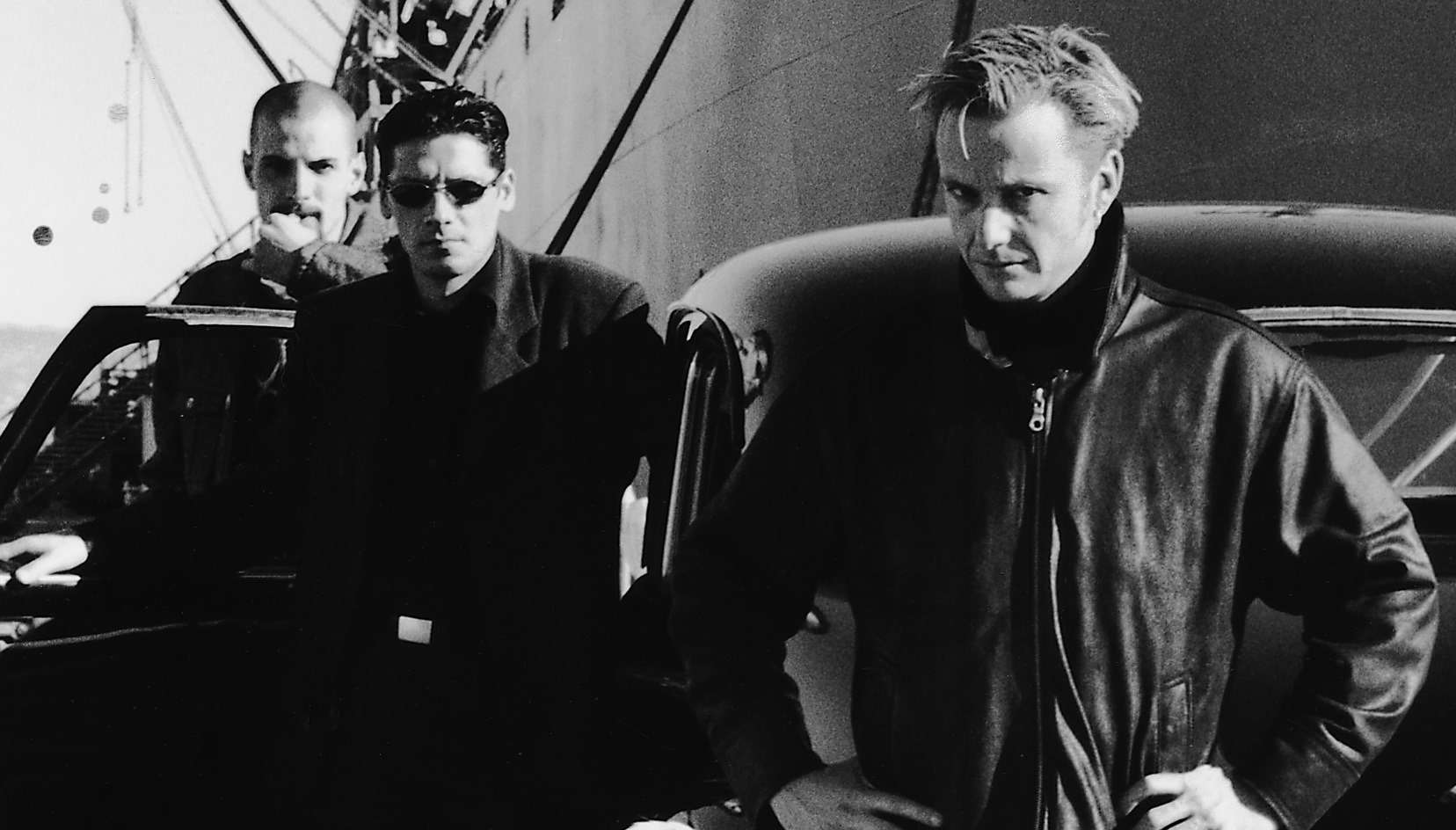
Disclaimer: I translated this. Mistakes are mine. Do not use in any professional articles or publications, or for commercial reasons.
Interview: December 1997, Radio Goethe
Question: In Germany, you play in the biggest venues and stadiums. And here in small clubs. What's that like for you?
Paul: Everyone sees it differently. Personally, I don't care about the size of the club. Whether you're playing in a monster stadium or in a small club has nothing to do with how fun it is. Playing in front of a small audience can be equally as shitty. Besides, if people thought the concert was good doesn't mean the band liked it too. It's rare both sides align.
Question: What are your experiences on this American tour?
Paul: Unbelievable. We should have come sooner. It's so easy. People here scream at moments that wouldn't even twitch an eyebrow back in Germany. Strangely enough, Americans are more open, a bit more naive - like big kids. They don't take everything dead serious and are somehow not as exhausting as Germans.
Question: What do you mean by this now?
Paul: Well, Germans are a bit slow to get going... tell me, are many Germans reading this now...? Whatever, I will complain a bit more anyway. Americans are quick to get excited. Perhaps quicker to forget too, but it's much easier to play here for us than we expected.
Question: You contributed two tracks to the David Lynch film Lost Highway. Have you felt that this has helped you?
Paul: We're better known than expected due to those two songs on the soundtrack. Nah, we're not exactly known, just better known. We thought nobody here knew us. But a few people do know us through the Lost Highway soundtrack and we're also on Mortal Kombat 2He means not the game, but the sequel film from 1997. but we don't know anything about it.
Question: So it doesn't matter that you sing in German?
Paul: I don't believe anyone has a problem with that at all. It's the same in Germany. Nobody understands a band singing in English live either unless they already know the lyrics. You pay attention to other stuff. You don't necessarily have to sing in English to succeed in the USA. People here almost get into it even more than they do back in Germany.
Question: But there's wordplay in your lyrics and surely that's being lost here?
Paul: A few things definitely get lost, but you don't only lose - you also win. The emphasis on lyrics in our songs, and we do have good lyrics, is dialed back some for the music. Apparently that doesn't hurt anything. We're also on a European tour [now]. In Barcelona, they were practically bouncing off the ceiling even though they didn't understand a word. They always sing along du hast du hast mich. We always do that with English bands too. For the longest time, I didn't know what Smoke On the Water by Deep Purple was about either. I thought it was about someone smoking.
Question: When I first heard you, I thought you were listening to a lot of Laibach and a lot of Die Krupps.
Paul: That's usually what people first say. Laibach vocals. Die Krupps' music. We had to learn to live with it. We didn't invent this music, we never copied anyone either. We like both groups, but we like more [than this]. I listen to ABBA too. We come across differently on a stage than Die Krupps, and not as theoretical as Laibach. We're more of a band than some art project. There are bands that are successful without the music, like Marilyn Manson. There's one good song, the rest okay, but the image is what matters most. You have to have some nerve these days.
Question: A clarification question: did you emerge from Die Skeptiker or the Inchtabokatables?
Paul: It's confusing with us. We were sort of like Die Skeptiker, our band was called Feeling B. But we were a bit funnier than Skeptiker. They were a dead serious finger wagging punk band. Our bassist comes from the Inchties and there were a couple other bands in that circle too. But nobody knows [those bands].
Question: You're always seen as a bit of an East-y band. Along the lines of the "East strikes back."
Paul: Glad to hear it, though I don't think it's quite that bad. If that label has stuck to us, I hadn't noticed. But we don't have any problem being from the East. Quite the opposite, I'm really proud of it. We're not really typical German or typical East. Even in the East itself, we were not typical Eastern Germans.
Question: However, you stand out with your sound among East bands. Karat, City, Puhdys, and now Rammstein.
Paul: We're also a Western band, in the sense that we only formed three years after they invaded the East.Paul uses überfallen, literally "invaded" or "overran" as a deliberately provocative description after reunification. I don't mean to explain a man's politics but in the future (2009) he will explain in a nz-online.de radio interview that he has a very complicated relationship with reunification. This is why he would say a word like überfallen that feels a bit harsh to read. In the 90s, he was very comfortable remaining East and knew this made him atypical. He didn't rush for consumerism either like many others from the East did. This remains true because in 1997, he bluntly said "I don't have a TV" and "I have enough money". And later when asked about his new financial situation due to successful music in 1998 he says, "I can buy really nice sunglasses now". He keeps blowing this off. In 2009, he jokingly says, "I belonged to the minority that liked the East [back then]. Now [after Ostalgie became a thing], I'm of the minority that likes the West." Rammstein is a kind of answer to the West. It wasn't a conscious thought process, but we didn't know how good we were when we started out either. We're now slowly realizing how many bad bands there are, even in the US. Here you simply play with a blank expression, we twitch around on stage a bit, light something on fire, and everyone has a good time over it. You can tell I'm getting a bit carried away now. I have to show you our bus. It looks like a brothel on wheels with lights around the seats, ceiling chandeliers, and such junk.
Question: Why do you think your mixture of heavy metal and industrial is successful?
Paul: It's definitely not because of the music because there are bands that do this better and aren't successful. I talk with fans often and always ask them, "How did you hear about us?" Out of 100, 99 say that they heard our CD at a friend's place and liked it. It's the music after all, I'm just realizing. People aren't disappointed at our concerts either. Even when we're only giving it half our effort, nobody out front notices it. We never put on bad shows and always invest in the show. Even when we had little money, we were messing around with rockets on stage. We've always made sure people don't leave our shows disappointed. We thought there were enough bad bands already, so let's make one people are actually happy to go see.
Question: But you also have this "bad boy image". Do you deliberately cultivate that?
Paul: We got that by accident because at the start, we never dreamed of someone finding that any good. It's like when you're drunkenly sitting with your friends telling filthy jokes, then the only thing you think about is that night. When you tell those same jokes on the radio a year later, it's completely different.I actually wonder if he's thinking of "ich will ficken" lyric specifically. Apparently it started off as a joke thing to be yelled and now it's on a song forever. There was also a band vote about leaving or removing the line for being too stupid lol. Imagine men huddled in a circle of some room, tallying votes over yelling "I want to fuck" very loudly. Good image. We just wanted to make trash. On top of it all, our girlfriends left us so at first it was like being reborn. We had burdens off our shoulders, met every day for a year and had minced meat for breakfast. It was a kind of rebirth.
Question: What's next for you?
Paul: We're just trying to carry on with our hammy little farce.This word is impossible to explain omg. I had a whole article explain it to me in-depth. The definition was: "theatrical behavior to attract attention in a mindless manner" and "comical play of low quality characterized with embarrassing tasteless jokes." In all honesty, I'm convinced Paul means the second definition. The same thing is happening to us in the US now like what happened in Germany three years ago. I really don't know why, but it's like a lottery win. We don't have all the stress other bands face.